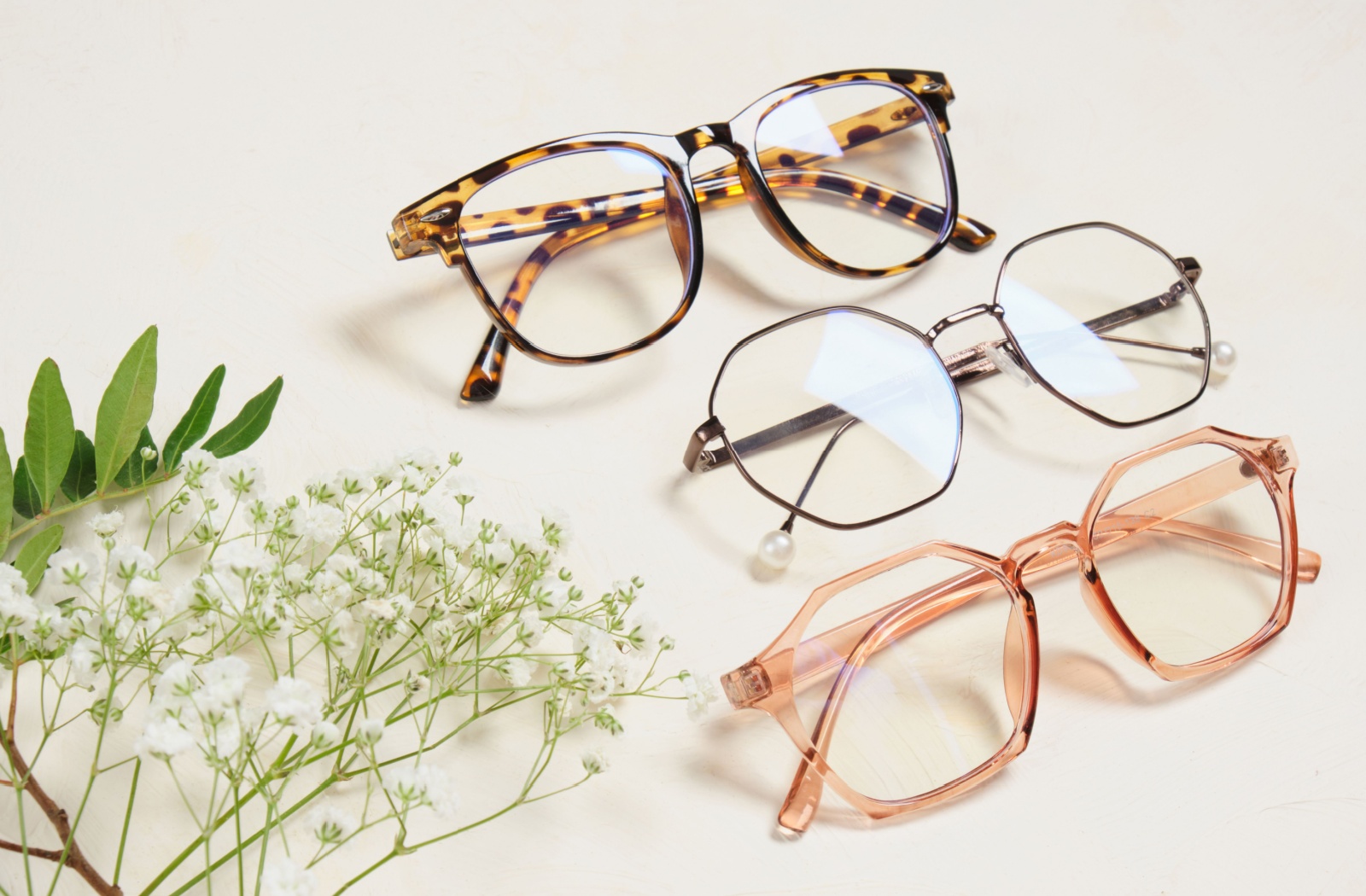
Glasses are a simple yet effective tool used by millions of people around the world to improve their vision. Whether you wear eyeglasses to correct nearsightedness, farsightedness, or astigmatism, or simply use them for reading, glasses work by bending light to focus more precisely onto your retina. But how exactly do they do this? Let’s dive into the mechanics of prescription glasses, the different types available, and what they do for your eyes.
What Do Glasses Do?
At their core, glasses correct your vision by altering the path of light entering your eyes. This is done through specially shaped lenses that adjust how light focuses on the retina—the part of the eye that sends visual information to the brain. Without glasses, this light may not focus correctly, leading to blurry vision.
Glasses help by:
-
Focusing light properly on your retina.
-
Correcting refractive errors, which occur when light doesn’t bend correctly through the eye’s lens.
-
Improving clarity for near, distant, or all-around vision, depending on your needs.
Eyeglasses: The Basics
Eyeglasses are designed to correct refractive vision issues. There are three primary types of refractive errors glasses help address:
-
Nearsightedness (Myopia): You can see objects nearby clearly, but faraway objects are blurry. Eyeglasses for myopia have lenses that are concave (thinner in the center), which helps diverge light before it enters the eye.
-
Farsightedness (Hyperopia): You can see distant objects clearly, but nearby objects are blurry. Glasses for hyperopia have convex lenses (thicker in the center), which help converge light before it reaches the retina.
-
Astigmatism: This condition causes blurred or distorted vision due to an irregularly shaped cornea. Glasses for astigmatism have specially shaped lenses that correct this distortion.
Types of Prescription Glasses
There are several types of prescription glasses, each designed for specific vision needs. Let’s take a look at some of the most common types:
1. Single Vision Glasses
These are the most common type of eyeglasses. They have one prescription across the entire lens, either for near or distance vision. Single vision glasses are perfect for people with either myopia or hyperopia.
2. Bifocal Glasses
Bifocal glasses have two different prescriptions in the same lens: one for seeing far away and one for close-up tasks like reading. The lenses are divided into two distinct sections, with a visible line separating the two.
3. Progressive Lenses
Progressive lenses offer a smooth transition between multiple prescriptions without visible lines. These lenses gradually shift in power, allowing you to see clearly at various distances. They are especially useful for people with presbyopia, a condition that makes it harder to focus on close objects as you age.
4. Reading Glasses
Reading glasses are designed specifically for close-up tasks like reading, sewing, or working on a computer. They can be worn by those who don’t need correction for distance vision but need help for close-up tasks due to presbyopia.
5. Computer Glasses
These glasses are specially designed to reduce eye strain caused by prolonged use of digital devices. They often have a slight magnification and may include a special coating to reduce glare from screens.
6. Safety Glasses
Safety glasses are equipped with impact-resistant lenses and sturdy frames. They are designed to protect the eyes from hazards in environments like construction sites, laboratories, or sports.
7. Sunglasses with Prescription Lenses
Prescription sunglasses combine vision correction with UV protection. If you need prescription glasses but also want protection from the sun, these sunglasses provide both in one convenient option.
Prescription Glasses: How They Are Made
Prescription glasses are crafted based on the prescription provided by an optometrist or ophthalmologist. The prescription specifies:
-
The type of refractive error you have (myopia, hyperopia, astigmatism)
-
The strength of the lenses required to correct your vision
-
The measurement of the distance between your pupils (pupillary distance or PD), which ensures the lenses are aligned correctly with your eyes
Once the prescription is received, the lenses are cut to fit your frame, and the lenses are coated for extra protection (like anti-glare or scratch resistance).
How to Choose the Right Glasses for You
When choosing prescription glasses, consider the following:
-
Lifestyle needs: If you spend a lot of time on the computer, progressive lenses or computer glasses might be the best choice.
-
Face shape: Certain frame shapes complement different face shapes, so it’s important to consider both comfort and style.
-
Frame material: Glasses come in various materials, including plastic, metal, and titanium. Choose a material that fits your comfort and durability needs.
-
Lens coatings: Anti-reflective, scratch-resistant, or UV-protective coatings can add functionality to your glasses.
Go Fish Rules: A Fun Way to Relax
After learning about how glasses work, why not relax with a simple card game like Go Fish? It’s a classic game that’s easy to learn and perfect for all ages. Here’s a refresher on Go Fish rules on Cardanoir.com:
-
Deal the Cards: Each player gets 5–7 cards (depending on the number of players). The rest of the deck is placed face down.
-
Ask for Cards: On your turn, ask another player for a card of a specific rank (e.g., “Do you have any 7s?”).
-
Go Fish: If the player has the card, they give it to you. If not, they say “Go Fish,” and you draw a card from the deck.
-
Make Books: The goal is to collect books of four cards of the same rank (e.g., four 7s).
-
End the Game: The game ends when one player collects all their books. The player with the most books at the end wins.
It’s a great game to unwind with after learning about how prescription glasses work!
Closing
Glasses are much more than just a tool for seeing better—they represent a way to improve your daily life, whether through the benefits of vision correction or the style they add to your look. Understanding how glasses work and the different types of prescription glasses can help you make an informed choice when selecting eyewear. And when you need a break from your learning, grab a deck of cards and enjoy a fun game of Go Fish using the simple Go Fish rules.